
Inhaltsverzeichnis
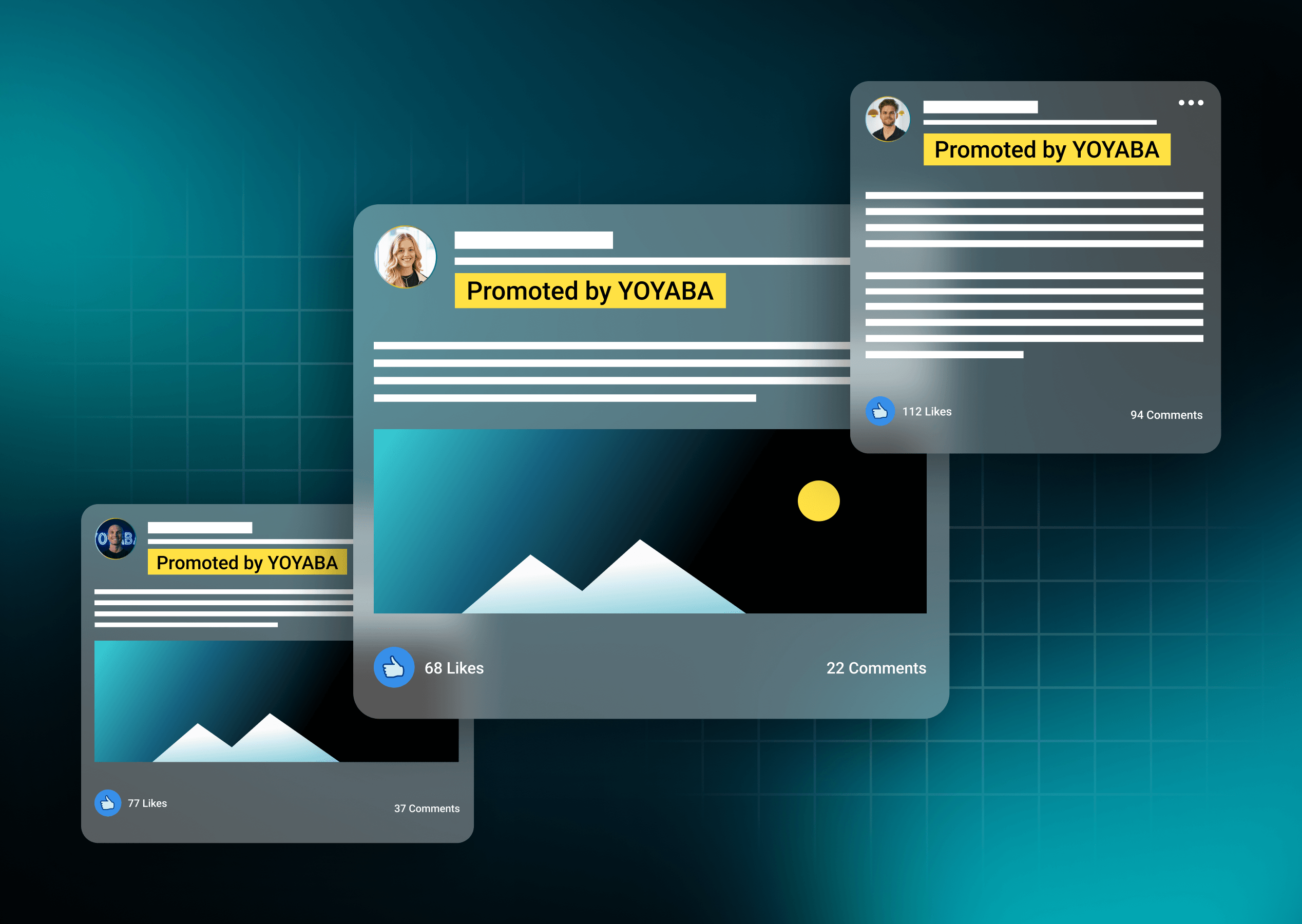
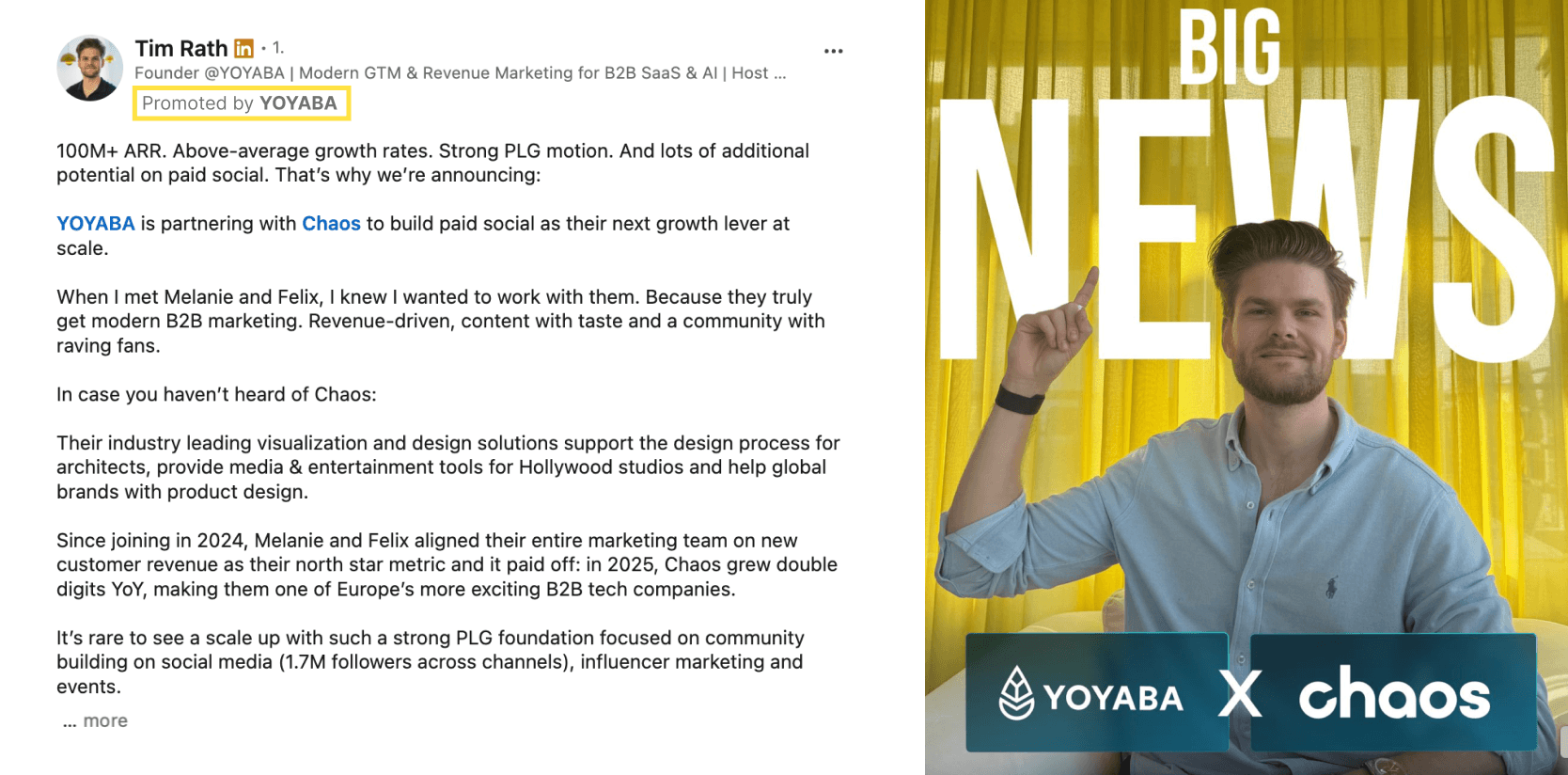
Scroll LinkedIn for a few minutes and you will pass a post from a founder or an executive that reads like a genuine, unfiltered take. Some of those posts are not organic at all. They are ads. The only tell is a small line under the name: "Promoted by." That is a LinkedIn thought leader ad, and it is the rare paid format that doesn't look like one.
The post comes from a real person's profile, a founder, an executive, a subject matter expert, and it gets pushed to a paid audience the same way any other LinkedIn ad does. The result is paid reach with the credibility of a human voice.
I run thought leader ads for B2B SaaS companies every week, and they are still one of the most underrated formats in B2B right now, especially where long sales cycles and skeptical buying committees make trust the whole game. Not because they are new or clever, but because most teams have heard of them, nodded along, and still default to running everything through the company page.
That is the mistake this article is about. It covers what LinkedIn thought leader ads are, why they beat standard sponsored content, the CTR and CPC you can expect, and the part most guides skip: how to run them for awareness at the top of the funnel and for pipeline at the bottom, with a real example from YOYABA's work with HubSpot DACH.
TL;DR:
Thought leader ads on LinkedIn at a glance
- What they are: Thought leader ads are sponsored organic posts from a real person's profile, not your company page. They carry a "Promoted by" tag.
- Why they work: B2B buyers trust people over brands. 73% find thought leadership a more trustworthy basis for judging a company than its marketing materials.
- Performance: They deliver 1.7x the click-through rate and 1.6x the engagement of standard single-image ads, at a lower cost per click.
- Full-funnel format: They are not only a top-of-funnel awareness play. Run with a capture objective, a clear CTA, and a link, they drive pipeline.
- Takeaway: Thought leader ads are the most efficient LinkedIn ads for B2B SaaS to run in 2026.
What are LinkedIn thought leader ads?
A LinkedIn thought leader ad is a paid promotion of an organic post that was published by an individual rather than a company page. You take a post from a person, a colleague, your CEO, an industry expert you partner with, and you put media budget behind it so it reaches an audience beyond that person's own followers.
How the format came about
LinkedIn launched the format in 2023 (LinkedIn). Before that, you could only sponsor content from your company page. If you wanted a founder's post in front of a cold audience, your options were to hope the algorithm carried it or to copy the text into a branded ad, where it lost everything that made it work.
What makes it different
The difference shows up in one small detail:
- Standard sponsored content sits under your company name and says "Promoted."
- A thought leader ad sits under a person's name and photo and says "Promoted by [your company]."
To the reader scrolling, a thought leader ad reads as a post from a human who happens to have something worth saying. The selling signal is quiet, the credibility signal is loud.
Standard sponsored content starts every interaction with the same handicap: people know it is a brand talking, and they brace for the pitch. A thought leader ad starts from a different place. Not authority, belief. Someone sharing what they actually think.
How it works
Mechanically, it is still part of the LinkedIn ad formats B2B teams already use:
- It runs through Campaign Manager, like any other campaign.
- You pick an objective and set targeting and budget.
- The post just happens to live on a person's profile instead of a logo's.
Why thought leader ads work: The trust gap between people and brands
Strip away the tactics and you are left with one behavioral truth: people trust people, and they brace for brands. We weigh the source before we weigh the message.
A claim from a named individual with a face and a track record gets processed as more credible than the same claim from a logo, because our brains read "comes from a person I can see" as a signal of trustworthiness.
The reach gap points the same way. Company page organic reach keeps sliding, while posts from individuals consistently pull more reach and engagement for the same content and the same audience. That is why employee and executive posts now do the heavy lifting on LinkedIn. Putting a paid budget behind a person rather than a logo compounds an advantage that already exists organically.
What the research says
The buyer data backs this up:
- 73% of B2B decision-makers say thought leadership is a more trustworthy basis for judging a company's capabilities than its marketing materials and product sheets. (Edelman)
- More than half spend over an hour a week reading this kind of content. (Edelman)
- Asked whose expertise they want during an evaluation, buyers rank senior executives (48%) and subject matter experts (46%) highest, with the implementation team close behind (43%) and the salesperson last (25%). (LinkedIn SaaS Buyer Survey 2024)
The pattern is consistent: buyers want to hear from credible people, not from the brand's sales motion. A thought leader ad is the one paid format that puts a credible person in the paid feed.
The dark social effect
A large share of B2B buying happens where you cannot track it: private DMs, Slack groups, WhatsApp threads, a screenshot of a post forwarded to a buying committee.
People share posts from people, and rarely an ad from a company page.
When your content lives on a human profile, it travels through dark social B2B LinkedIn channels in a way branded creative almost never does. You will see it in your pipeline long before you see it in your attribution dashboard.
So the "why" is not complicated. You are buying reach, but you are buying it wrapped in the one wrapper B2B buyers still open.
The numbers: LinkedIn thought leader ad CTR and CPC benchmarks
Trust is the argument. The performance data is what gets the format approved.
LinkedIn's own data makes the case. Compared with standard single-image ad campaigns, thought leader ads deliver:
- 1.7× the click-through rate
- 1.6× the engagement
LinkedIn notes the figures are directional, taken from early pilot data, but they match what we see running the format day to day.
The reason is structural, not magic. LinkedIn's auction rewards content people actually engage with by charging you less per click. A format that earns comments and dwell time gets a discount the company page rarely qualifies for. Higher engagement, lower cost.
This is also where the thought leader ad performance conversation gets oversold. A high click-through rate is not the same as pipeline. Plenty of posts rack up clicks and comments without moving a single deal. Engagement is a filter, not a finish line. A thought leader ad with a great CTR and no path to revenue is just a popular post you paid for.
That is exactly why the next distinction matters so much. The same format does two completely different jobs depending on where you point it.
Top of funnel vs bottom of funnel: Two jobs, one format
Most guides describe thought leader ads as a pure awareness play. LinkedIn itself nudges you toward brand awareness and engagement objectives when you set them up. That advice is not wrong, but it is half the picture, and treating it as the whole picture is why so many teams write the format off as "nice for branding, not for pipeline."
The format runs in two distinct modes. They look similar in the feed and behave nothing alike in the account.
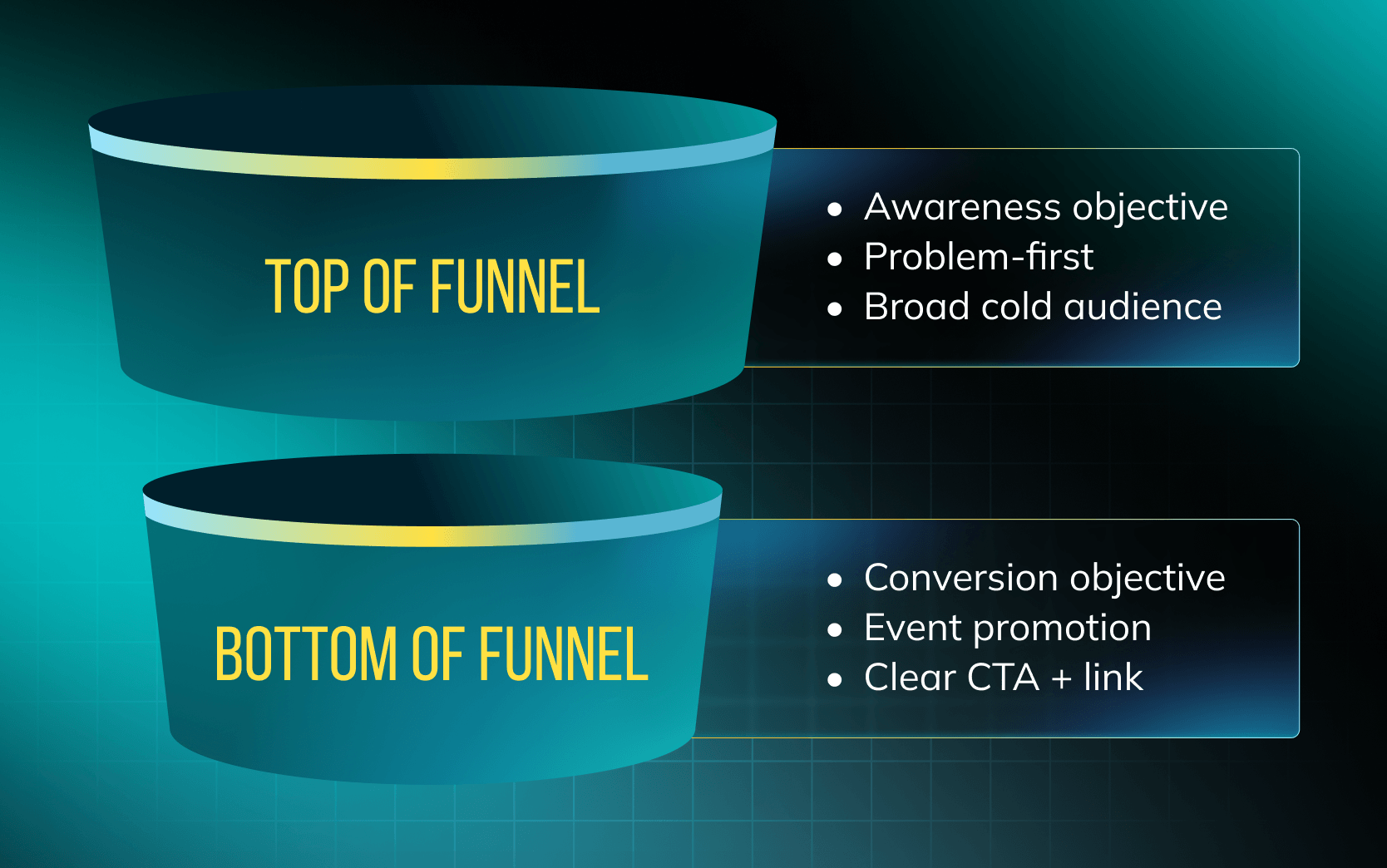
Top of funnel: Personal brand and executive awareness
At the top, thought leader ads are a personal brand LinkedIn ads play. The instinct is to reach for the CEO, and the CEO is a fine start, but the most underused move is to go wider than one person. Amplify a mix of voices:
- Your founder and C-level leaders
- Subject matter experts and everyday employees
- External creators and influencers in your space
- Your customers' own testimonial posts about you
A buyer who sees the same point of view echoed by five credible people in your orbit trusts it far more than the same message repeated by one executive. The job here is not a click, it is association: a set of credible faces showing up consistently in front of the market with problem-first messaging, so that when a buyer enters the category, your name already carries faces and opinions, not just a logo.
This is where an executive LinkedIn ads strategy earns its keep, and where most companies under-invest. You want a roster of voices posting consistently, week in and week out, and then you amplify the posts that land to the 50,000 to 500,000 people you actually want to influence.
You are not asking for anything yet. You are building the familiarity that makes every later touch cheaper. Broad audience, problem-first angle, no hard CTA. Measured in reach, engagement, and the slow compounding of being known.
Bottom of funnel: Capture, webinars, and pipeline
At the bottom, the same format becomes a capture machine, and this is the part the market underrates. Here you are not building awareness. You are converting intent. The post still comes from a real person, but it points at something specific: a webinar, an event, a case study, a clear next step with a CTA and a link.
The mechanics shift. You run it with a capture or conversion objective. You retarget warm audiences, people who visited the site, engaged with earlier ads, or follow the page, at a higher frequency. The cold layer earns attention. The retargeting layer, usually a smaller slice of budget over a 90-day window, reinforces and asks for the action. The voice stays human, but it is doing a sales job, and because it does not feel like a sales job, intent goes up rather than down.
Use both ends, and connect them
The split is the whole strategy. Top of funnel buys you a relationship. Bottom of funnel cashes it in. Run only the first and you get a famous founder and a flat pipeline. Run only the second and you are asking strangers to register for a webinar from a person they have never heard of. A real B2B LinkedIn demand gen strategy uses the format at both ends and connects them.
How HubSpot used thought leader ads to drive 124+ deals
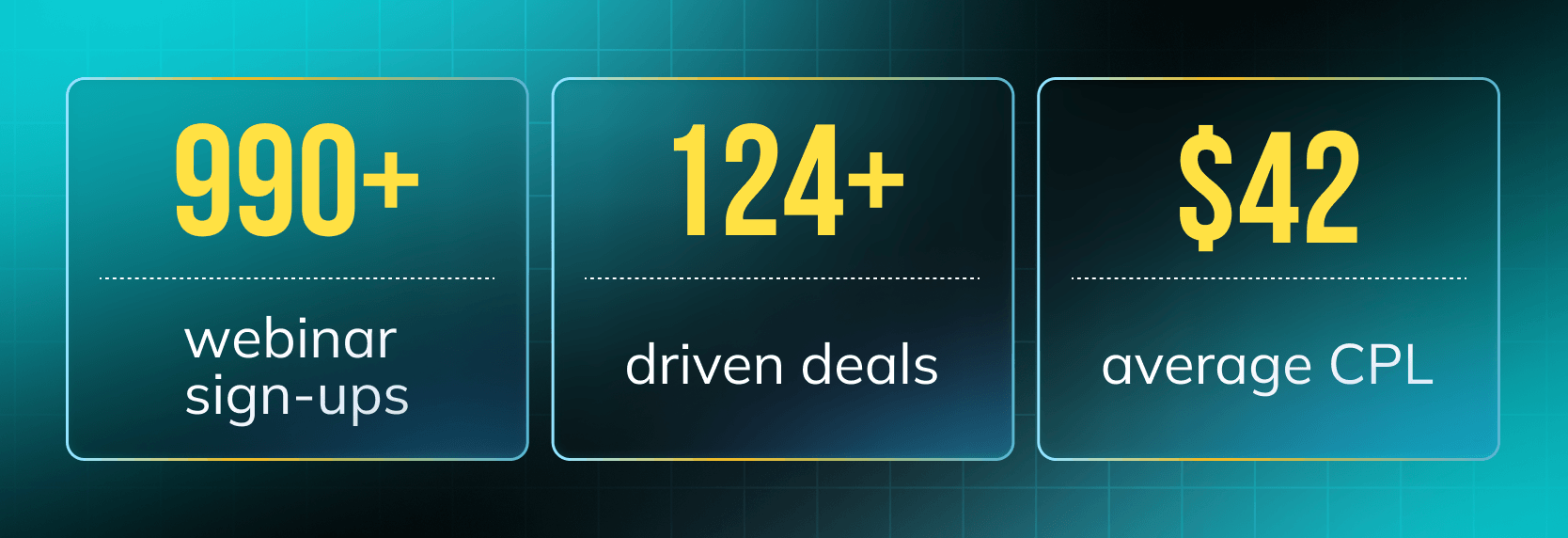
Here is the bottom-of-funnel version in practice, and the clearest counter to the idea that thought leader ads are "just for awareness."
The problem
HubSpot, a category-leading B2B SaaS platform, came to us through their DACH team wanting to open up a new lead channel for their webinars, which are one of their strongest drivers of pipeline and revenue. Before working together, they had run only small-scale LinkedIn campaigns for webinar promotion. Simple single-image ads, minimal budget, no real structure. The performance was limited and, just as importantly, so were the learnings.
The solution
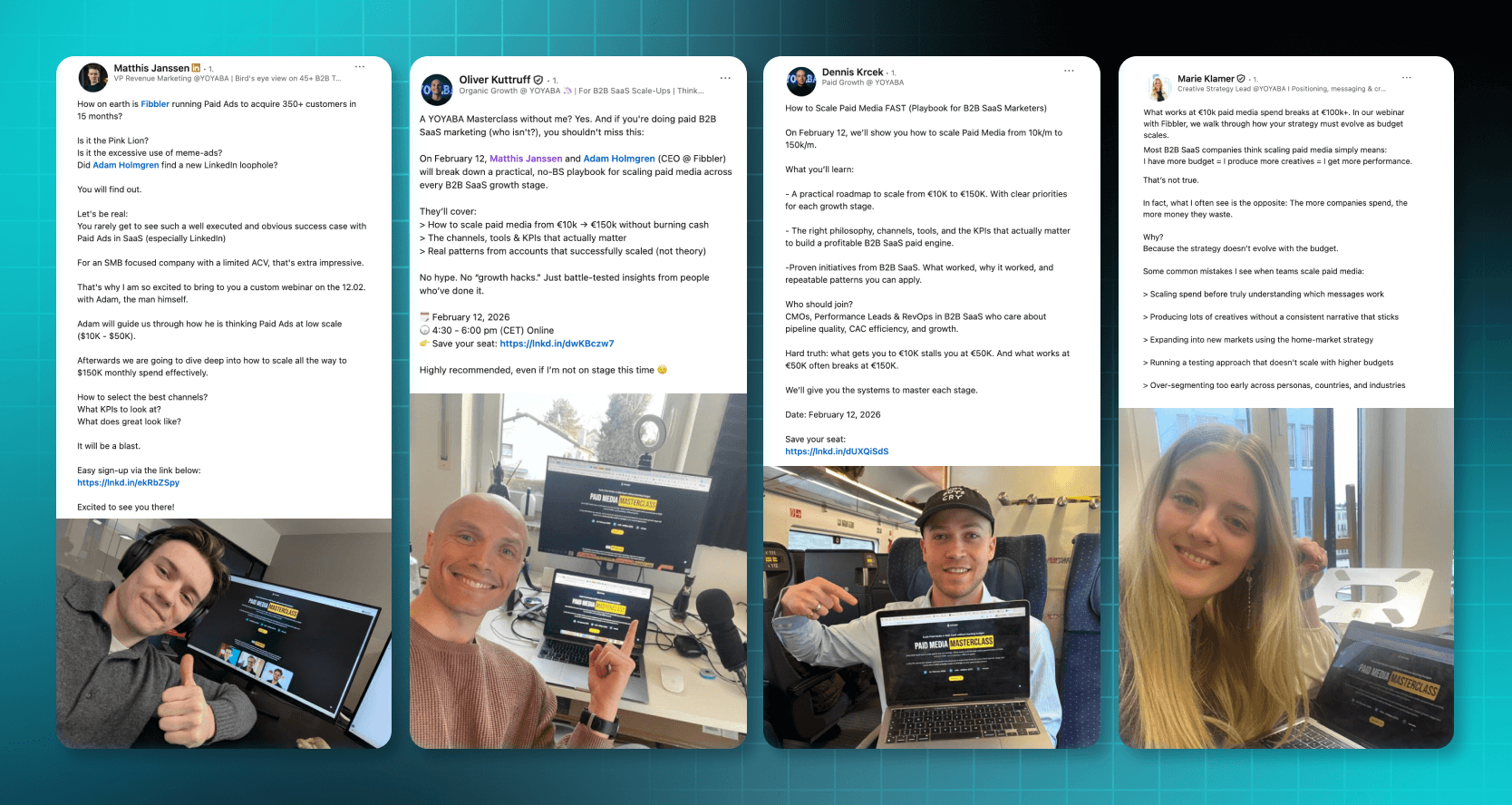
We did the opposite of the standard advice. Instead of using thought leader ads for brand awareness, we pushed them toward a hard performance goal: webinar sign-ups. We promoted expert-led content through the posts of internal HubSpot voices, external B2B creators, and the actual speakers from each event. Real people, talking about the thing they were about to teach, with a clear CTA and a link to register.
The results
The outcomes speak for themselves:
- 990+ webinar registrations and 124+ deals to date, across six webinars
- CPLs as low as $3, and an average under $42. For high-intent B2B SaaS lead gen, that is rare
- The best-performing post brought in 150 registrations and converted 25 deals on its own
- On average, 37% of HubSpot's webinar registrants came from creator and thought leader ad campaigns
What started as a six-month test got extended because the performance and the learnings held up.
"YOYABA has become an integral part of our promotion strategy, especially when it comes to distributing case studies, live events, and, most importantly, webinars, our main driver of deals, pipeline, and ultimately MRR."
Justin Pohl
Marketing Manager / Brand, Awareness & Demand Gen at HubSpot
The takeaway is not that this only works at HubSpot's scale. It is that the format does serious bottom-of-funnel work when you pair it with the right voices, genuinely useful content, and a willingness to test what converts instead of what feels safe.
Read the full HubSpot success story.
How to run thought leader ads on LinkedIn
Here is how to approach running thought leader ads on LinkedIn.
1. Start with the voice, not the budget
The best results come from three kinds of profiles:
- Internal subject matter experts, the people who actually know the product and the problem
- External business creators, who bring their own audience and credibility
- Event speakers or partners, who have a natural reason to talk about what you are promoting
Pick voices that are believable for the message. A post about technical implementation lands harder from an engineer than from the brand.
2. Amplify what already earned attention
This is the rule that matters most. Do not write a post specifically to turn it into an ad and hope it performs. Look at what already resonated organically and put budget behind the winners. Organic engagement is the filter. No organic traction, no amplification.
3. Get the permission right
You promote an existing organic post, not a net-new one, so the post has to exist first. The author grants permission inside LinkedIn. They can approve a single request or auto-approve all future ones, and they can revoke access at any time, which instantly switches the ad off. For employees this is straightforward. For external creators, customers, or partners, you need their explicit approval, and if they are compensated, the post needs a partnership label (LinkedIn Help).
4. Choose the objective by funnel stage
The objective and setup change completely depending on where in the funnel you run the ad:
- Top of funnel: awareness or engagement, broad cold audience, no hard ask
- Bottom of funnel: a capture or conversion objective, warm retargeting audiences, and always a CTA with a link
Put most of the budget into the cold layer that introduces the person and the problem, then run a smaller retargeting layer over a 90-day window that reinforces the message and asks for the action.
What content actually works as a thought leader ad?
The format only works if the post underneath it is good. And "good" here has a specific meaning that trips up a lot of teams, especially the ones used to writing ad copy.
The single biggest mistake is the announcement. A post that opens with "We're excited to announce our upcoming webinar on..." is not a thought leader ad. It is a company-page ad wearing a person's photo. It has no tension, no opinion, no "here's what I learned," nothing that makes a human stop scrolling. The wrapper is human, the content is a brochure, and people can feel the mismatch instantly.
The posts that work lead with something real:
- A point of view or a take the reader might disagree with. Tension earns the stop.
- A specific story. "I just got off a call where a prospect told me..." beats any generic insight.
- A data shock or a number that reframes how someone sees their own situation.
The hook does most of the work. On LinkedIn people decide in the first two seconds whether to keep reading, so the first line carries more weight than the rest of the post combined. After that, formatting matters more than people think. One idea per paragraph, plenty of line breaks, emojis only where they actually help. A wall of text gets scrolled past no matter how good the thinking is.
For the bottom-of-funnel version, you still lead with the human angle, then earn the CTA. The reader should get value from the post whether or not they click. The registration link is the door at the end of a good room, not the whole point of the room.
Why most B2B brands still underuse this
If thought leader ads are this efficient, why isn't the feed full of them? Mostly excuses worth pushing back on.
"We don't have a personal brand." You do not need a famous founder. You need one credible person willing to share a real opinion. Internal experts, partners, and speakers all work. The HubSpot results came from a portfolio of believable voices, not one celebrity profile.
"Our founder won't post." Start with whoever will, and remove the friction. Most experts do not post because the process is painful, not because they have nothing to say.
"It feels risky to put budget behind a person." The author controls permissions and can revoke them in one click. The real risk is the opposite: pouring your whole LinkedIn budget into a company page buyers have learned to ignore.
The honest reason this format is underused is that it sits between two teams. Too "organic" for the paid media manager, too "paid" for the content team, so it falls in the gap and nobody owns it. That gap is the opportunity, and it is still underpriced because adoption lags the evidence. That will not last. The brands building the muscle now keep the low CPCs while everyone else piles in later at a premium.
Lorem ipsum dolor sit amet
Lorem ipsum dolor sit amet, consectetur adipiscing elit. Suspendisse varius enim in eros elementum tristique.
Support needed?
If you want help setting this up, building the voices, the content engine, and the campaign structure, that is exactly the kind of work we do on the YOYABA paid media team.
THe Bottom Line
Thought leader ads are a system, not a hack
A thought leader ad is not a growth hack you bolt onto a campaign. It is the natural meeting point of two things that are already true: B2B buyers trust people more than logos, and LinkedIn rewards content people actually engage with. The format just lets you pay to put those two forces to work at the same time.
Treat it like a system. Build a roster of credible voices. Help them post things worth reading. Watch what earns organic attention. Amplify the winners, to a cold audience for awareness and a warm one for capture. Connect the top and bottom of the funnel so awareness has somewhere to go. Then measure it against pipeline, not vanity metrics, so you keep doing the version that actually drives revenue.
That is the difference between a clever LinkedIn trick and a real channel. The brands treating LinkedIn thought leader ads as a channel are building a pipeline advantage at a cost their competitors will not see until it is gone.
If you want help setting this up, building the voices, the content engine, and the campaign structure, that is exactly the kind of work we do on the YOYABA paid media team.
FAQ
What are LinkedIn thought leader ads?
LinkedIn thought leader ads are paid promotions of organic posts published by an individual, like a founder, executive, or expert, rather than by a company page. They appear in the feed under the person's name with a "Promoted by [company]" label, so they read as authentic content while reaching a paid audience.
How much do thought leader ads cost?
There is no fixed price, since LinkedIn runs an auction. In practice, thought leader ads tend to be cheaper per click than other formats because of their higher engagement. In our HubSpot work, cost per lead ran as low as $3 and under $42 on average.
Are thought leader ads better than sponsored content?
Usually, yes. Sponsored content LinkedIn B2B campaigns run from the company page, so people know it is the brand talking. Thought leader ads come from a person, earn more engagement, and win cheaper clicks. For most LinkedIn ads for B2B SaaS, person-led posts win on cost and trust.
Can you use thought leader ads for lead generation, not just awareness?
Yes. LinkedIn positions thought leader ads as a top-of-funnel awareness format, but with a conversion objective, a clear CTA, a link, and a retargeting layer, they drive pipeline. YOYABA used them to generate 990+ webinar sign-ups and 124+ deals for HubSpot.
Do you need the person's permission to run a thought leader ad?
Yes. The author has to grant permission inside LinkedIn before you can sponsor their post. They can approve one request or auto-approve all future ones, and they can revoke permission at any time, which immediately turns the ad off (LinkedIn Help).
Can you promote a post from someone who doesn't work at your company?
Yes. You can run third-party thought leader ads using posts from customers, partners, or industry creators, as long as they grant permission. If the person is compensated for the post, it needs a partnership label (LinkedIn Help).
Can a thought leader ad be a brand-new post written just for the ad?
No. You sponsor an existing organic post from the person's profile. The post has to be published organically first, which is also why amplifying content that already earned engagement works better than creating something purely to advertise.
How do you measure whether thought leader ads are working?
Match the metric to the funnel stage. At the top of the funnel, look at reach, engagement, and audience growth. At the bottom, measure registrations, leads, cost per lead, and influenced pipeline. Be careful with CTR as a standalone goal, since high click-through does not reliably correlate with lead quality. Tie performance back to revenue, not engagement.

.png)