Inhaltsverzeichnis
If you want a repeatable playbook, you’re in the wrong place.
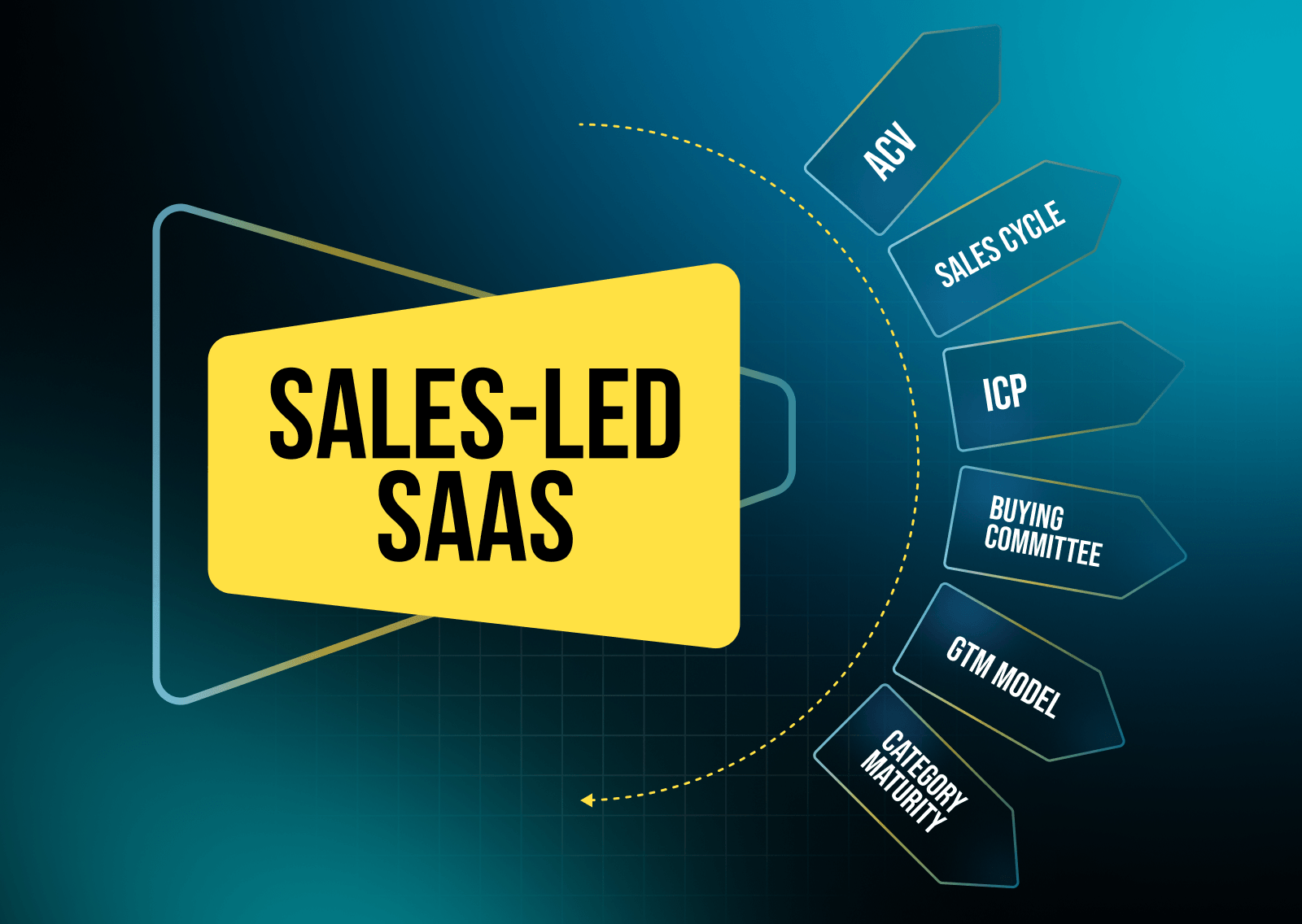
Sales-Led SaaS motions differ too much for that. A €20k ACV (Annual Contract Value) product with a 60-day sales cycle needs a very different Organic Growth strategy than a €500k enterprise product with a 12-month cycle, multiple stakeholders and a completely different go-to-market (GTM) motion.
So this is not a checklist of tactics to copy.
It’s a framework for thinking about Organic Growth in Sales-Led SaaS and for making better bets based on your ACV, ICP (Ideal Customer Profile), sales process and buying journey.
What is Organic Growth?
Organic Growth is the process of creating sustainable business growth through non-paid marketing channels and assets that help buyers discover, evaluate, and trust your company. It goes beyond SEO and can include GEO and AI visibility, content, social, communities, and the organic reach of founders, Sales teams, and internal experts.
TL;DR:
Organic Growth for Sales-led-SaaS
- There is no universal Organic Growth playbook for Sales-Led SaaS. Your strategy should depend on how you actually sell, including your ACV, sales cycle, ICP, buying committee, and whether you run a pure Sales-Led or hybrid PLG/SLG motion.
- Higher ACV changes the economics of reach. High deal values can reduce your dependence on volume, but only relative to your addressable market and growth targets. The key implication is that each relevant opportunity can justify more investment in reaching, educating, and influencing the right accounts.
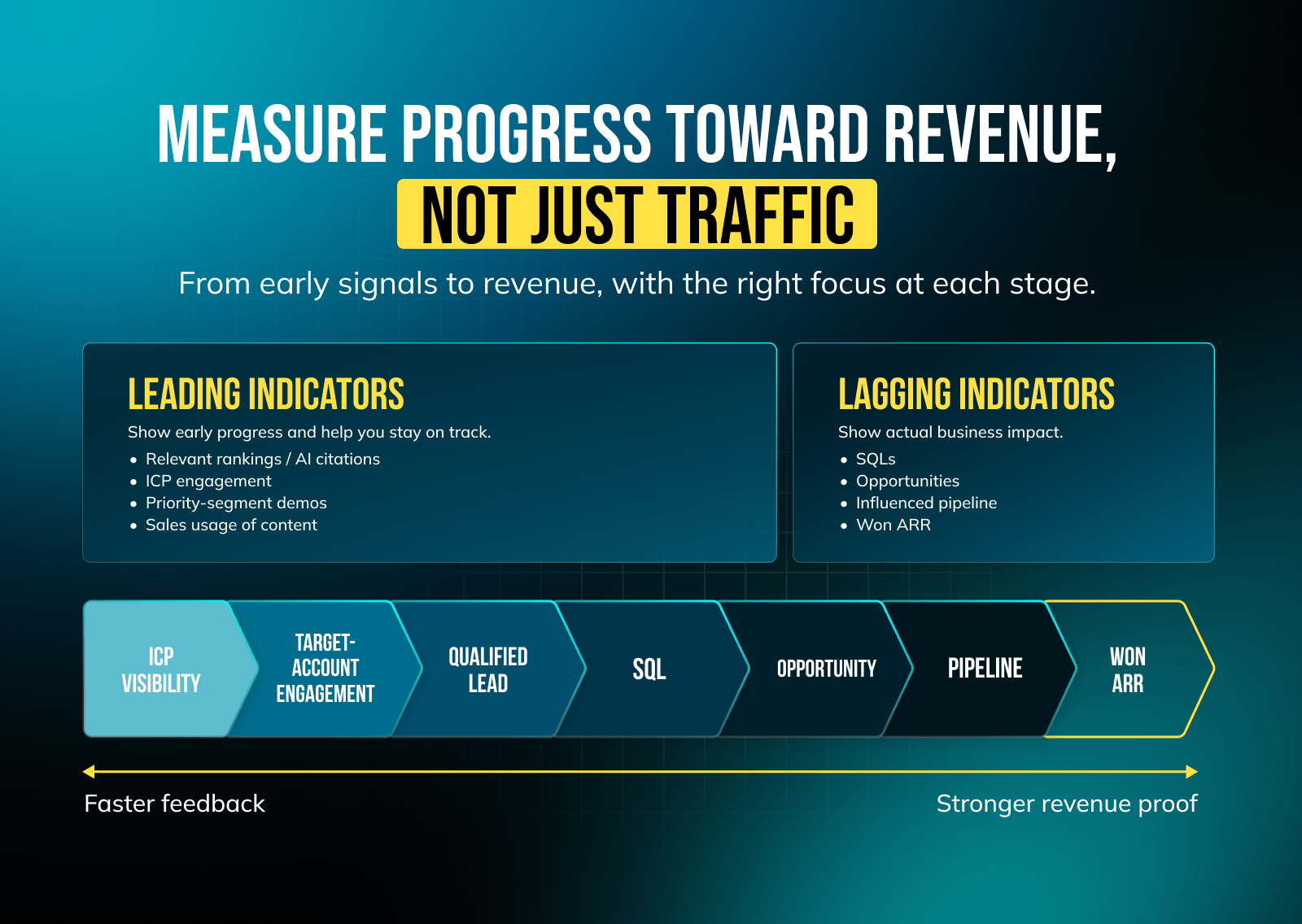
- Long sales cycles change how you measure success. If revenue takes 6–12 months to materialize, you need leading indicators such as ICP engagement, qualified demos, shortlist visibility, target-account activity, and content usage in active deals alongside lagging metrics like opportunities, pipeline, and won ARR.
- Sales should be part of the Organic Growth engine. Sales conversations reveal recurring objections, competitors, buyer questions, and ICP quality. Organic Growth can turn those insights into content, comparison pages, proof, and enablement assets that improve future sales conversations.
- In high-ACV SaaS, making the shortlist can matter more than maximizing reach. Buyers research vendors across Google, AI systems, LinkedIn, YouTube, communities, analysts, and peers. Organic Growth should help ensure your company appears wherever buyers discover and evaluate potential vendors.
First, define what kind of Sales-Led motion you actually have
Your GTM motion should determine your Organic Growth strategy before channels or tactics enter the discussion.
Are you pure SLG or hybrid PLG/SLG? Is your ACV €15k or €500k? Are you selling to SMBs, mid-market or enterprise? How long is the sales cycle, how many people are involved in the buying decision, and how mature is the category?
These aren’t small details. They fundamentally change what Organic Growth should do.
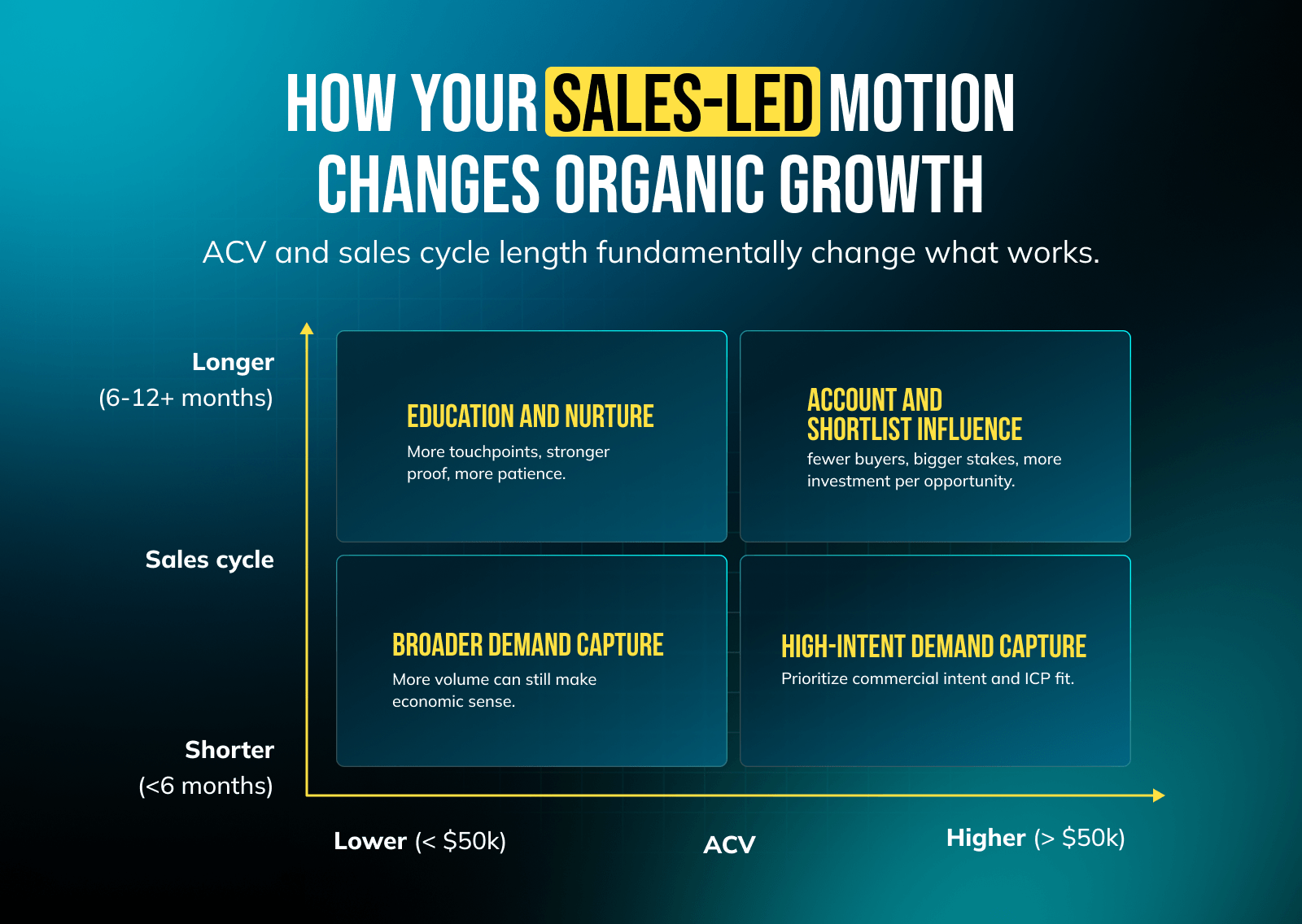
A €15k ACV product with a relatively short sales cycle can still benefit from broader demand capture and higher volume. A €500k enterprise product with a 12-month sales cycle and a buying committee of ten needs a much more targeted strategy.
Keep that €500k example in mind. You might only need a handful of additional customers for an initiative to pay off. That changes what you can rationally invest into reaching, educating and converting individual accounts.
Before you do anything, understand the economics and mechanics of how you actually sell.
Organic Growth in Sales-Led SaaS is not a volume game
You do not need the most visitors. You need the right people from the right accounts.
In PLG, more reach can often translate directly into more sign-ups, users and eventually revenue. In SLG, that logic breaks much faster.
100 relevant buyers can be worth more than 100,000 visitors.
That’s why traffic becomes a dangerous primary KPI in Sales-Led SaaS. It can make a strategy look successful while attracting people who will never become customers.
The ultimate question is not “How much traffic did we generate?”, it’s “How do we get closer to the right buyers?”
Five principles of Organic Growth for Sales-Led SaaS
There are a few principles that become increasingly important the more Sales-Led your motion gets.
1. Higher ACV changes the economics of reach
Higher deal values can reduce your dependence on volume, but only relative to the size of your market and growth targets.
If you sell a €300k product into a market of 300 potential accounts, maximizing traffic is probably not the priority. If there are 10,000 realistic target accounts, broader reach may still matter a lot.
The point is that if each opportunity is worth significantly more, you can justify investing more to reach, educate, and influence the right accounts.
That changes what becomes economically viable. You can invest more in deeper content, stronger proof, tailored buying experiences, account-specific campaigns, or assets built for a relatively small group of high-value buyers.
Higher ACV does not mean volume stops mattering. It means relevance becomes more valuable, and the amount you can rationally spend per relevant account increases.
2. The longer the sales cycle, the more important leading indicators become
You cannot wait 12 months to learn whether your strategy is working. Leading indicators are early signals that show whether your strategy is moving in the right direction before the final business outcome is visible.
Closed-won revenue still matters, of course. But if your sales cycle lasts a year, you need useful signals long before that revenue appears.
Those indicators depend on your motion. For example:
- ICP engagement: Are people from the industries, roles, or company profiles you actually want to reach engaging with your content?
- Target-account traffic: Are people from named accounts you care about visiting and returning to your website?
- Qualified demos: Are your Organic Growth efforts generating demo requests from companies that fit your ICP, not just more form fills?
- Shortlist visibility: Are you appearing when buyers compare vendors and build their initial consideration set?
- Relevant rankings or AI citations: Are you visible for the topics, categories, and buying questions that actually matter to your ICP?
- Content usage in active deals: Is Sales using your content, comparison pages, case studies, or other assets to move real opportunities forward?
The exact metrics matter less than the principle: you need evidence that you are moving closer to revenue. Otherwise, you are flying blind for most of the year.
Lagging indicators measure the outcome after it has happened. These include SQLs, opportunities, influenced pipeline, and won ARR.
3. The slower the feedback loop, the better your strategic bets need to be
Slow feedback makes bad strategic bets expensive. That means you should spend more time on research upfront.
Talk to Sales. Look at CRM data. Analyze win/loss reasons. Understand which competitors keep appearing, which pains actually matter, which stakeholders are involved, and what makes deals stall.
You will never have perfect information. But if it takes months to learn whether an initiative worked, you should make the most educated bet possible before committing serious resources.
4. Organic and Sales need to operate almost like one team
Sales should be one of your most important sources of Organic Growth insight.
They know which competitors appear in deals, which objections repeat, which ICPs actually close, and which questions prospects keep asking.
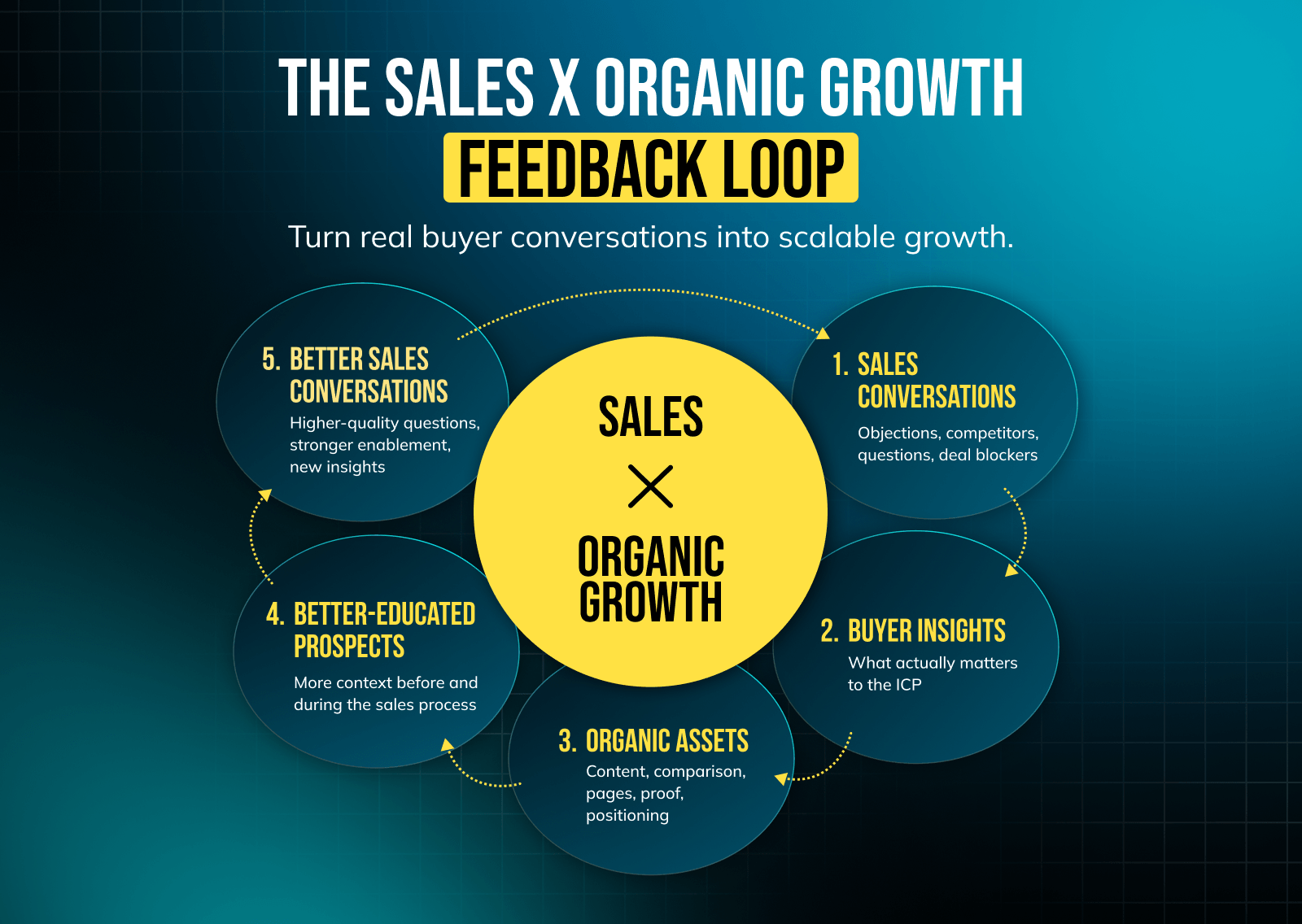
Organic Growth can turn those signals into scalable assets. That relationship should not be a quarterly handoff. It should be an ongoing feedback loop.
More on that in a second.
5. The higher the stakes, the more important shortlist presence becomes
In enterprise SaaS, winning often starts with making the shortlist.
Buyers rarely discover one vendor and immediately purchase. They compare options across Google, ChatGPT, Reddit, YouTube, analyst reports, LinkedIn, peers, and communities.
Part of Organic Growth is making sure your company appears where those shortlists are created.
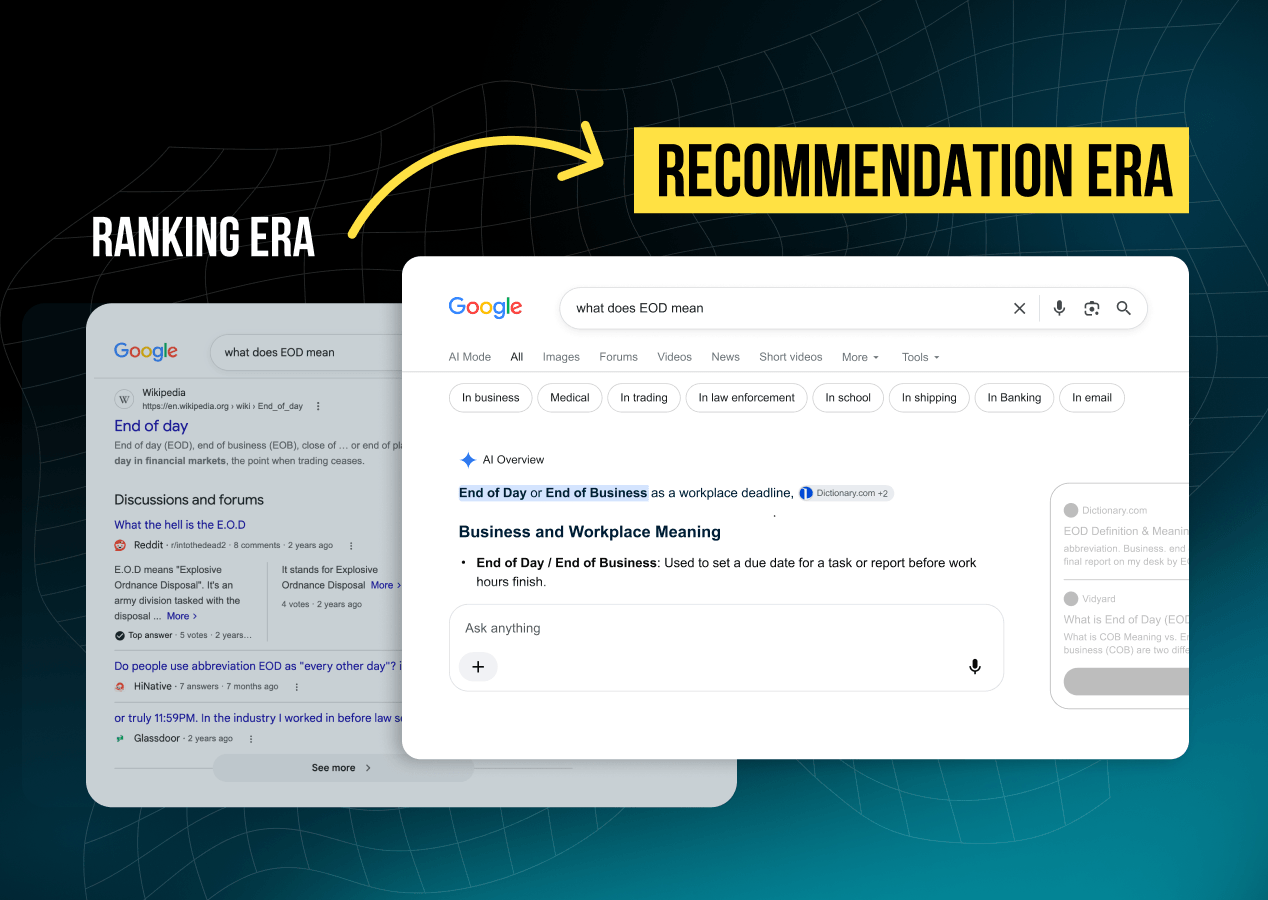
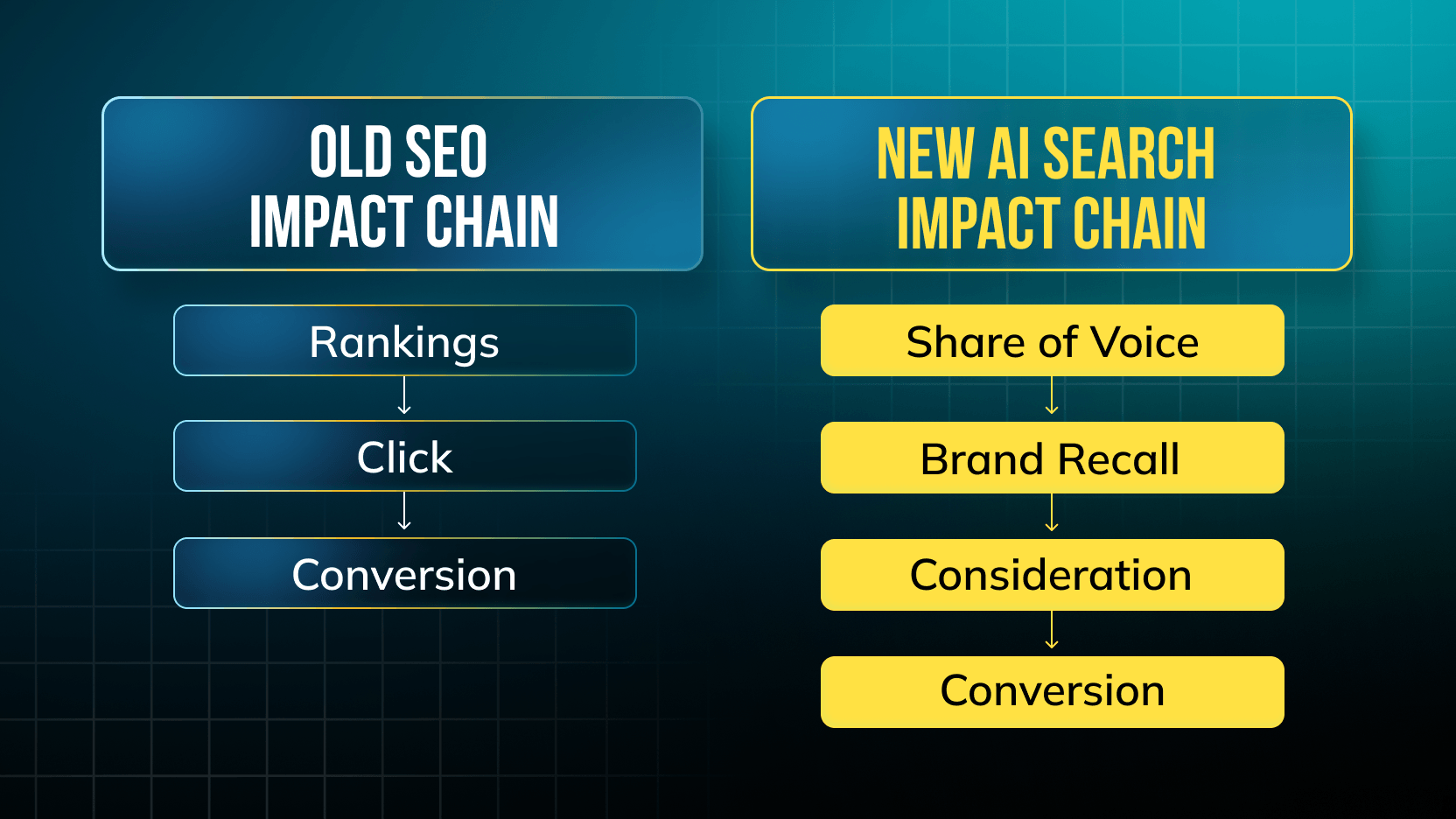
This is also where Generative Engine Optimization (GEO), or improving your visibility in AI-generated answers and recommendations, can become strategically important. Not because every SaaS company suddenly needs a separate “GEO strategy,” but because AI systems can influence which vendors buyers consider in the first place.
For high-ACV Sales-Led SaaS, being the sixth-best-known option can sometimes be almost the same as not existing at all.
{{cta}}
Your Sales team should become part of the Organic Growth engine
Sales is not just a stakeholder. It can become part of your research and distribution engine.
Sales teams sit on some of the best buyer research you can get: real objections, competitor mentions, recurring questions, deal blockers, and signals around which ICPs actually convert.
That creates a simple loop: Sales conversations → buyer insights → Organic assets → better-educated prospects → better Sales conversations → new insights
The tighter that loop becomes, the better your Organic Growth strategy gets. Sales can also contribute to distribution.
AEs, founders, and internal subject-matter experts creating content on LinkedIn, appearing in videos, contributing to communities, or sharing their expertise should not sit outside your Organic Growth strategy.
In high-consideration B2B purchases, buyers often trust people before they trust brands. Your strategy should use that.
What this changes in practice
The principles above should directly change which initiatives you prioritize and how much you are willing to invest in them.
If Sales keeps losing against the same competitor, build a comparison asset they can actually send during active deals.
If buyers repeatedly worry about implementation or migration risk, create content that answers those questions before or during the sales process.
If one ICP generates traffic and demos but almost never closes, stop celebrating the SEO numbers and reduce investment.
The bigger shift, however, is economic.
Imagine one of your target accounts could be worth €500k per year. Spending serious budget on an exceptional buying experience for that account might suddenly make sense.
A bespoke microsite focused on its specific problems, a custom benchmark, an executive business case, or a highly targeted ABM content experience could all be rational investments.
That would be absurd for a €2k ACV product. For a €500k opportunity, it might not be.
Organic Growth does not always have to mean building one asset that scales to everyone.
The same logic applies to AI visibility. If buyers use AI systems to create their vendor shortlist, being visible there can directly affect whether you make it into the evaluation set.
How to measure Organic Growth in a Sales-Led motion
Do not make traffic your primary measure of success.
Traffic can still be useful as a diagnostic metric. In a Sales-Led motion, however, it should rarely be the end goal.
A more useful hierarchy is: ICP engagement → qualified lead → SQL (Sales Qualified Lead) → opportunity → pipeline → ARR (Annual Recurring Revenue)
Because Sales-Led cycles can be long, you need both leading and lagging indicators.
Leading indicators tell you whether you are moving in the right direction. Depending on your motion, these might include:
- ICP visibility
- Target-account engagement
- Relevant rankings or AI citations
- Demos from priority segments
- Sales usage of content in active deals
Lagging indicators tell you whether those signals eventually translated into business impact:
- SQLs
- Opportunities
- Influenced pipeline
- Won ARR
Even SQLs can be misleading if the quality is poor. Ten SQLs from the wrong segment are not automatically better than three that turn into serious opportunities.
The closer your measurement gets to pipeline quality and revenue, the more useful it becomes.
How often should the strategy change?
Adapt continuously, but do not overreact to every short-term signal.
Different signals require different cadences:
- Weekly: Sales feedback, lead quality, and recurring objections
- Monthly: Leading indicators and execution priorities
- Quarterly: Strategic bets, ICP focus, and channel mix
- Long-term: Pipeline, win rates, and won ARR
This is especially important when your sales cycle is long.
You cannot wait a year before learning and adapting. At the same time, you need to give larger strategic bets enough time to work.
Lorem ipsum dolor sit amet
Lorem ipsum dolor sit amet, consectetur adipiscing elit. Suspendisse varius enim in eros elementum tristique.
Du willst deine KI-Sichtbarkeit ausbauen?
KI-Suche belohnt Unternehmen, die zu vertrauenswürdigen Quellen werden, nicht jene, die Rankings jagen. Unsere Organic Growth & SEO Services helfen B2B-Unternehmen dabei, Autorität und Sichtbarkeit in Suche und KI-Plattformen aufzubauen. Unsere Content Marketing Services unterstützen dabei, genau die Inhalte zu erstellen, die KI-Systeme bevorzugt zitieren und empfehlen.
THe Bottom Line
Don't copy the playbook. Build the right one for your motion.
Sales-Led Organic Growth is not about finding the perfect SEO checklist.
It is about understanding your GTM motion deeply enough to make better bets about where Organic Growth can influence revenue.
Higher ACV changes the economics of reach. The longer the sales cycle, the more important leading indicators become. The slower the feedback loop, the better your initial bets need to be. The more Sales-Led your motion is, the closer Organic Growth and Sales should work. And the higher the stakes, the more important it becomes to make the shortlist.
So do not copy someone else’s playbook, but build the one that fits how you actually sell.
FAQ
Is Organic Growth still useful for enterprise Sales-Led SaaS?
Yes. Its role simply changes. Instead of maximizing traffic, Organic Growth can help your company get discovered, make vendor shortlists, answer buying questions, support active opportunities, and influence multiple stakeholders throughout a long sales cycle.
Which KPIs matter most for Sales-Led Organic Growth?
There is no universal KPI set. Focus on indicators that connect Organic Growth to your actual sales motion, such as ICP engagement, qualified demos, SQLs, opportunities, influenced pipeline, and won ARR.
How closely should Marketing and Sales work together?
Very closely. Sales conversations contain valuable information about objections, competitors, ICP quality, and buying questions. Organic Growth should use those insights to create assets that improve future buyer journeys and support active deals.
Does GEO matter for Sales-Led SaaS?
It can, especially when buyers use AI systems to research categories and create vendor shortlists. The strategic question is not whether GEO is trendy, but whether AI visibility affects how your buyers discover and evaluate vendors.
.png)