
Inhaltsverzeichnis
If I asked ten B2B SaaS teams what "organic growth" means, I’d probably get ten quite similar answers: growth you don't pay for. SEO. Content. The pipeline that shows up without a media budget behind it. Like free, right?
That definition isn't wrong, exactly. Organic growth really doesn't run on continuous ad spend. But defining something by what it lacks tells you almost nothing about what it is. And that gap has a real cost. When you don't understand what organic growth actually is, naturally it gets deprioritized and ends up with the leftover budget.
I've watched this play out across numerous growth-stage SaaS companies: the paid budget gets set first, receives the most attention, and gets reported on most confidently. Organic gets whatever's left over and a vague mandate to "do some content"— or, worse, is treated as a “nice to have.” Then, two years later, the same companies wonder why their CAC keeps rising and why every channel feels like it's renting their customers by the month.
In this article I’m going to fix this definition. I'll cover what organic growth means in B2B SaaS and why it deserves intentional investment rather than the leftover budget.
In short: organic growth is the one part of your engine that compounds. Treating it like a cost-saving alternative to paid is probably the most expensive mistake in B2B marketing.
TL;DR:
What is organic growth in B2B SaaS?
Organic growth is the part of your B2B SaaS growth engine driven by assets you own— search visibility, content, community, word of mouth, and product-led loops—that keep acquiring customers after the work is done. Unlike paid acquisition, which stops the moment you stop spending, organic growth compounds: each asset stacks on the last. That compounding is exactly why it deserves intentional, ongoing investment rather than leftover budget. It's also the most capital-efficient way to lower your CAC and build up a strong pipeline. But there’s a catch: it's slow to start and hard to measure with last-click attribution. This is why so many teams underinvest in it right before it would have paid off.
What organic growth actually means in B2B SaaS
Here's a cleaner definition than "growth you don't pay for":
Organic growth is revenue growth that comes from channels you own rather than channels you rent. It's the customers you acquire, retain, and expand without paying for each click, impression, or placement along the way.
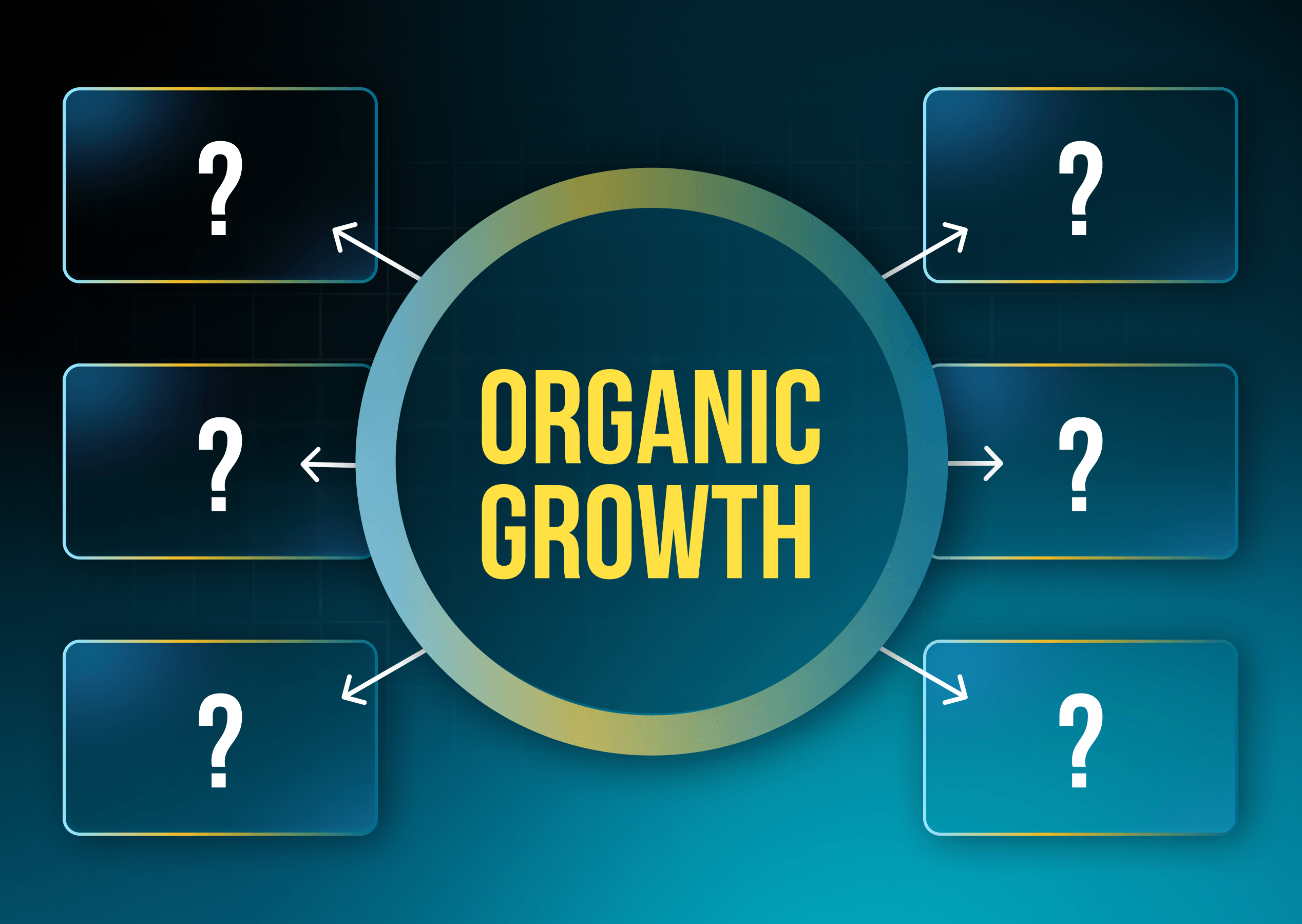
In B2B SaaS, that organic engine usually consists of five mechanisms:
- Search and content: Ranking in Google, getting cited in AI search (ChatGPT, Perplexity, Google AI Overviews), and the blog posts, comparison pages, and resources that pull buyers in.
- Word of mouth and referral: Customers recommending you to peers, in Slack groups, in procurement conversations that you never really get to see.
- Community: The user groups, forums, and audiences that produce conversations and content around your product.
- Product-led loops: Virality built into the product itself, where using it naturally exposes new people to it.
- Brand and earned media: The podcasts, mentions, and reputation that make buyers arrive already knowing who you are.
.png)
Why "organic" is a misleading word
I'd get rid of the word "organic" if I could, since it hides three assumptions that distort how companies think about and approach it:
- It implies “free.” It isn't. The cost is real and it shows up as labor and time rather than media spend. A content engine, a community, a referral loop: all of these need people with deep knowledge and expertise and months of effort before they return anything, especially outstanding results. Calling that "free" is how it ends up staffed by an intern and a part-time freelancer.
- It implies passive. It’s most definitely not. "Organic" makes it sound like something that just happens without any influence—like a plant growing without any tending. In reality, the compounding assets that drive organic growth have to be deliberately built and maintained. Rankings decay or fluctuate. Loops break. What works today might be completely irrelevant in a few months' time. Nothing runs on autopilot, let alone delivers outstanding results.
- It implies a channel. It isn't one. Organic growth is a system—a portfolio of assets that work together and reinforce each other. Your content builds the topical authority that lifts your rankings, your rankings build the brand recall that fuels word of mouth, your community produces the content.
Considering this, better terms would be owned growth or compounding growth. Both are more honest and both point you toward the property that actually makes this worth doing.
The property that changes everything: Compounding
Paid acquisition is linear. Organic growth compounds.
Paid works like a relationship that resets every month. You spend, you get a result, you stop, you get nothing. A paid channel returns 3x in a month and still returns roughly 3x in the following month or years— the same trade, over and over, for as long as you keep paying.
Organic works like an asset that appreciates. The article you publish today will still be there even if next month's budget runs out. A year from now it can still rank, still get cited by AI systems, still drive signups and that at zero marginal cost. But it doesn't sit there in isolation. Every new asset adds to the library of existing assets: more internal links, more topical authority, more domain trust, more branded search, more recall. The pieces reinforce each other and the whole engine gets more efficient as it grows.
Running the math says it all:
- A paid channel that returns 3x in month one has returned 3x of that month's spend by month twenty-four. It never compounded; it just repeated.
- An organic asset that returns nothing in month one might have returned 50x of its original cost by month twenty-four, because it never stopped working and the library around it kept expanding.
One looks like a treadmill and the other like a flywheel.
There's a caveat here though and it's the reason many teams never get the payoff: compounding is slow at the start. This isn't always the case, but for the majority of real-world examples, the organic system looks flat for the first few months. No rankings, no pipeline, nothing to be super excited about. That flat stretch is not a failure. It's the normal shape of the curve, and it should be expected. But it's exactly what makes organic so easy to kill prematurely. Someone looks at three months of quiet numbers, compares them to paid's instant feedback, and pulls the plug right before the curve would have bent upward.
Organic vs paid growth: Not the war you think it is
"Organic vs paid" seems like a cage match, with one side winning. Looking deeper, that framing is wrong, because the two do completely different jobs.
Paid: Fast, predictable, controllable
Paid buys speed, predictability, and control. You can switch it on tomorrow, forecast it with reasonable confidence, and scale it up or down on demand. For a new product that needs pipeline this quarter, nothing else moves that fast.
Organic: Durable, compounding, defensible
Organic buys durability and margin. It's slower and harder to forecast, but the unit economics improve over time rather than staying flat, and the assets stay with you. It's also where most of your defensibility comes from. A competitor can outbid you on a keyword tomorrow, but they can't outperform your topical authority or your community overnight. Whatever takes real time and effort to build is very hard to replicate.
Organic and paid feed each other
Ultimately, the strongest strategy is to run both, organic and paid. Not only do they complement each other—they feed each other. Brand built through organic lowers your paid CAC, because buyers who already recognize you convert at higher rates and cheaper clicks. Paid can accelerate the distribution of your best organic assets.
The real CAC advantage isn't about "free" content
This is also where the CAC reduction story gets misunderstood. Organic doesn't lower your CAC because any individual piece is "free." It lowers your blended CAC because the marginal cost of acquisition through your owned engine trends toward zero as the assets compound. The more of your pipeline that owned channels carry, the cheaper your overall acquisition becomes. That's a structural advantage paid can never deliver, no matter how well you optimize the auction.
Why organic gets leftover budget (while it shouldn’t)
If organic growth compounds and lowers CAC, why does it consistently lose the budget fight? The answer in one word: attribution.
Last-click attribution tells the wrong story
Last-click attribution flatters paid and starves organic. Picture a real buyer journey: someone reads three of your articles, hears your founder on a podcast, lurks in a community where your product comes up and finally—weeks later, ready to evaluate—types your brand name into Google and clicks a paid brand ad on the way in. In the report, paid gets 100% of the credit. Organic did the work of creating the demand; paid captured it at the finish line and took the trophy.
AI search makes the gap even wider
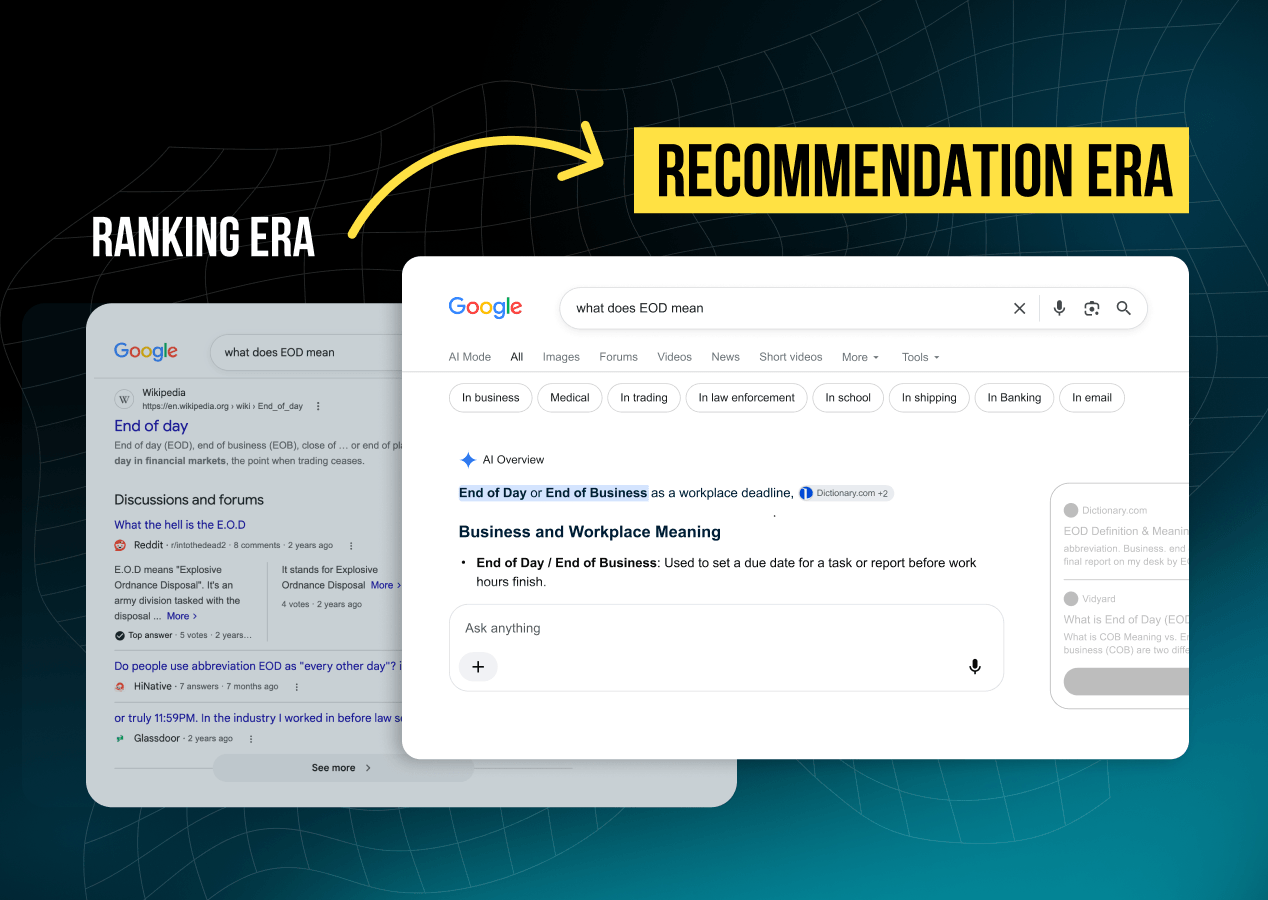
This is the same measurement gap we've written about in the shift to AI search: buyers develop their opinions on ChatGPT, Perplexity and Google AI Overviews long before they ever click anything. And none of that influence shows up in a last-click report. You can be the brand AI systems recommend in hundreds of thousands buying conversations a week and see nothing when you open your attribution dashboard.
The result: Companies fund the treadmill, not the flywheel
In a budget meeting, organic looks weaker next to the channel with the cleaner number even though it's the part of the engine that appreciates. Companies end up starving the compounding asset and over-funding the rented one, because it provides easy numbers to show to the board meeting. Then they are surprised when CAC keeps increasing year after year. And that’s the treadmill they’ve optimized for.
Measure organic on its actual job
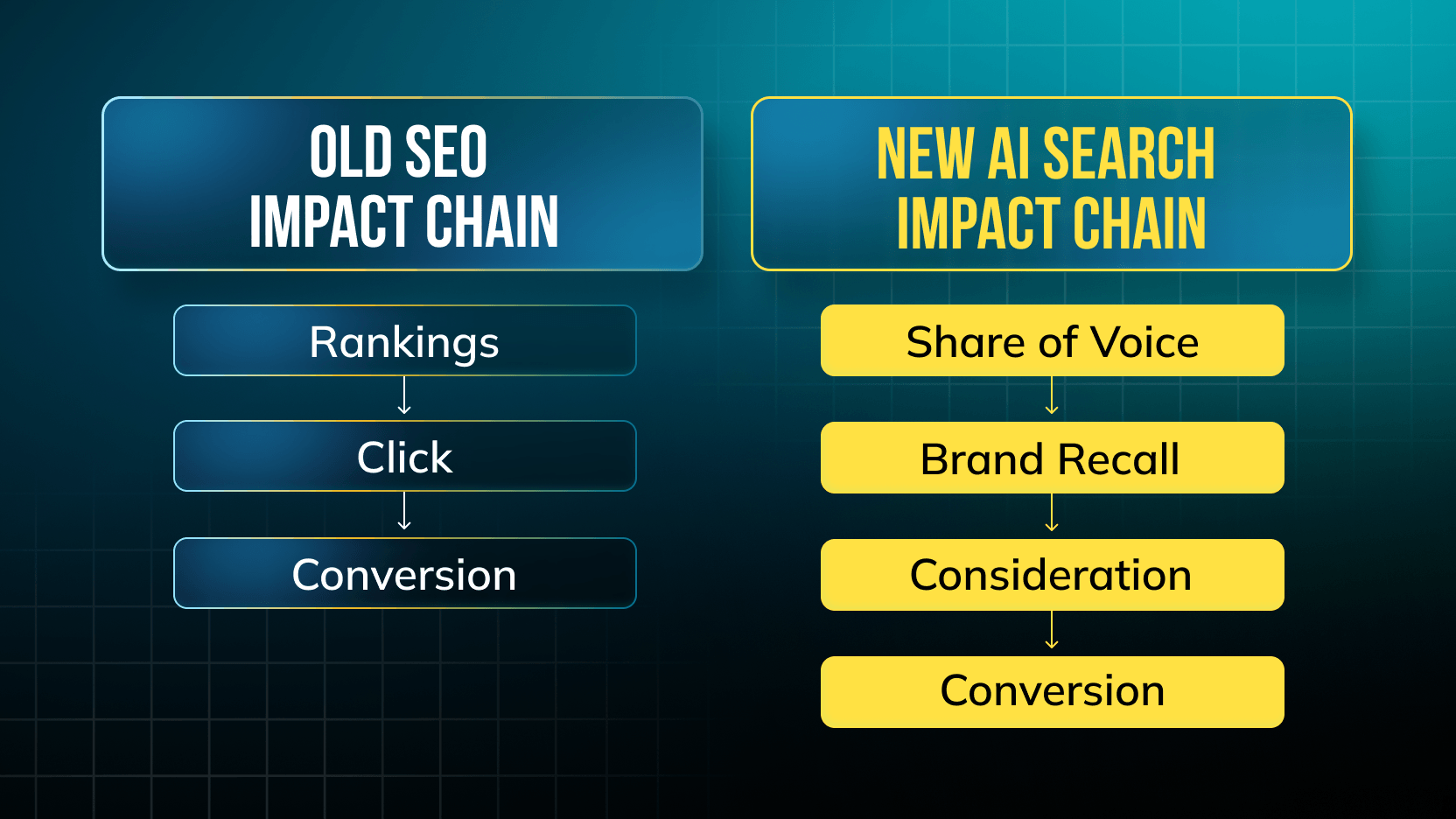
The solution is not to pay less attention to attribution. It's to stop judging organic by a framework built for paid.
Measure organic on its actual job:
- Share of voice across search and AI platforms
- Branded search growth over time
- Pipeline influenced rather than last-click sourced
- Blended CAC over time
Take a step back, look at the broader picture, and pay attention to where you’ve been a few years ago.
How to grow B2B SaaS organically
You don't need a highly complicated playbook to start. You need a few principles applied with patience and intention.
1. Own a topic, not just a keyword
Pick a territory you can own. Topical authority is more valuable than scattered posts. Don’t fall into the trap of writing one article on each of the twenty topics. Go deep in one area to become the obvious source. Own a topic you want to be known for, not just a keyword.
2. Treat your strategy as a series of experiments
Think of this as a series of experiments, not a rigid plan. This is the key principle I’d emphasize above all else. Every B2B company is unique, with its own niche, ideal customer profile, average deal size, and buying journey. Because of this, the organic strategies that worked for one company rarely translate directly to another.
For instance, using programmatic SEO to generate leads for a broad tool like Zapier might be completely off-base for a niche product that only has a few thousand potential buyers. In such cases, focusing on building a community or creating a few well-researched pages can give you much better results.
Start small with two or three channels you own, observe what resonates with your audience, and then double down on the one or two strategies that show real promise while letting the others go. The aim isn’t to do everything under the sun, but to discover what works consistently for you. The only way to find that out is through testing, not assumptions.
3. Build assets, not campaigns
Ask one question of everything you create: will this still be relevant in two years? A campaign has an end date. An asset built around your ICP and its pain points doesn't. Focus your effort and resources toward the second kind.
4. Create things worth citing
Original data, real frameworks, honest case studies, a clear point of view—this is the content that both humans and AI systems reference. Summaries of what everyone already knows will most likely be ignored.
5. Measure compounding, not clicks
Watch the trend line, not the monthly conversion. Is share of voice rising? Is branded search growing? Is more of your pipeline arriving already aware of you? Those are the signals you are in the right direction.
{{cta}}
Lorem ipsum dolor sit amet
Lorem ipsum dolor sit amet, consectetur adipiscing elit. Suspendisse varius enim in eros elementum tristique.
Need support for your Organic Growth Set-up?
If you'd rather not build all of this from scratch, this is the core of what we do: our Organic Growth, SEO & GEO services and Content Marketing services exist to build exactly this kind of compounding engine for B2B Tech & AI software companies.
THe Bottom Line
Organic growth is the compounding core of a durable B2B SaaS growth machine—the part of your engine that keeps working, keeps lowering your CAC, and keeps building the brand recall that makes every other channel cheaper. Organic builds you a machine that creates real, loyal customers.
FAQ
What is organic growth in B2B SaaS?
Organic growth in B2B SaaS is revenue growth that comes from channels you own rather than channels you rent: search visibility, content, community, word of mouth, and product-led loops. Instead of paying for each click or impression, you build assets that keep acquiring customers after the work is done. The defining feature isn't that it's free; it's that it compounds over time.
Is organic growth better than paid growth?
Organic and paid growth do different jobs. Paid growth buys speed, predictability, and control, which is ideal when you need pipeline quickly. Organic growth buys durability and margin. It's slower to start but compounds. The strongest engines run both, and the two reinforce each other.
How long does organic growth take to work?
Organic growth tends to look flat for the first several months before the curve trends upward, because compounding is slow at the start. A few months of quiet numbers isn't a failure, it's the normal shape of the curve. Make sure this expectation is communicated with leadership before you start, so the budget doesn't get cut right when things are about to turn.
How do you measure organic growth?
To measure the growth of organic traffic track the percentage of voice on both search and AI platforms, AI-generated answer mentions, the increase in branded search, pipeline influenced (rather last-click sourced), and overall CAC over time. When these metrics are all moving in the right direction simultaneously, the organic engine is working.
Does organic growth reduce CAC?
Yes, but not because any single piece of content is free. Organic growth lowers your blended CAC because the marginal cost of acquiring customers through owned channels trends toward zero as your assets compound. The more of your pipeline that compounding channels carry, the cheaper your overall acquisition becomes. That's a structural advantage that paid spend, however well optimized, simply cannot match.
.png)